
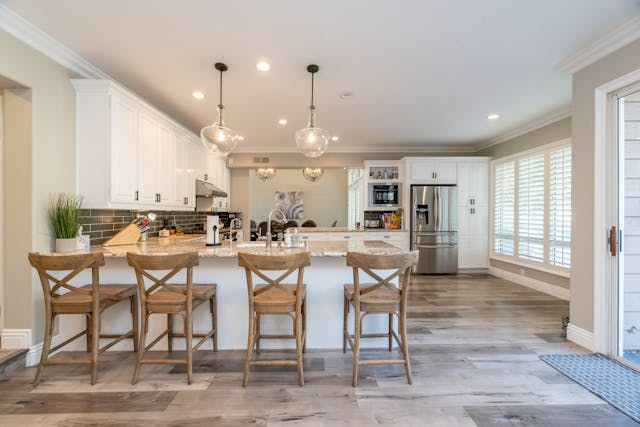
This article examines the key principles and tips for kitchen lighting so you can create a bright, inviting, and functional kitchen by combining appropriate lighting.
The Importance of Lighting in Kitchen Renovation and Interior Design
Proper lighting makes the space appear larger and more open and facilitates various activities in the kitchen. Good lighting can highlight the beauty of materials and colors and even change the ambiance of the kitchen. In kitchen interior design, the combination of natural and artificial light is very important.
Types of Kitchen Lighting
- Ambient Lighting
This is the main light that illuminates the space, usually provided by ceiling lights, panels, or chandeliers. In kitchen renovation and interior design, ensuring uniform distribution of ambient light is crucial so that the entire space is well-lit. - Task Lighting
Focused and purposeful lighting is placed in areas like countertops, sinks, and stoves to provide sufficient visibility for precise tasks. Examples include LED strip lights, halogens, or under-cabinet lights. - Accent Lighting
These lights are used to highlight specific areas of the kitchen, such as islands, shelves, or feature walls. Hidden lights, small ceiling lamps, and colored lights are types of accent lighting.
Important Tips for Kitchen Lighting in Renovation and Interior Design
- Combine Natural and Artificial Light
Maximize the use of natural light. Position windows and skylights optimally and design artificial lighting for times when natural light is insufficient. - Choose Appropriate Light Color
Cool light is suitable for work areas, while warm light creates a sense of relaxation and coziness. Combining both can create a balanced atmosphere. - Use Adjustable Lights
Dimmer lights allow you to adjust the intensity based on need and time of day, creating a more pleasant environment. - Under-Cabinet Lighting
LED lights under cabinets improve countertop visibility and add a special aesthetic. These lights should be glare-free and indirect.
Conclusion
Lighting is a key element in kitchen renovation and interior design that requires careful planning. Combining ambient, task, and accent lighting along with natural light makes the kitchen more functional and attractive. The choice of color and intensity of light also significantly affects the ambiance. By following lighting principles, you can achieve a bright, beautiful, and efficient kitchen.
FAQ
What is the best type of light for the kitchen?
A combination of natural light, warm ambient light, and cool task lighting yields the best results.
Is under-cabinet lighting necessary?
Yes, it improves visibility on countertops and adds aesthetic appeal.
How can natural light be increased in the kitchen?
Using large windows, skylights, and light-colored walls and cabinets helps reflect more natural light.
Are LED lights better than halogen?
Yes, LEDs are preferred due to lower energy consumption and longer lifespan.
Are adjustable lights recommended?
Yes, they allow light intensity to be tailored to activities and time of day.
How can kitchen lighting be modernized?
Use hidden lights, LED strip lights, and a combination of different light colors.
Can lighting affect kitchen materials?
Yes, proper lighting highlights the texture and color of materials, enhancing the space’s beauty.


