
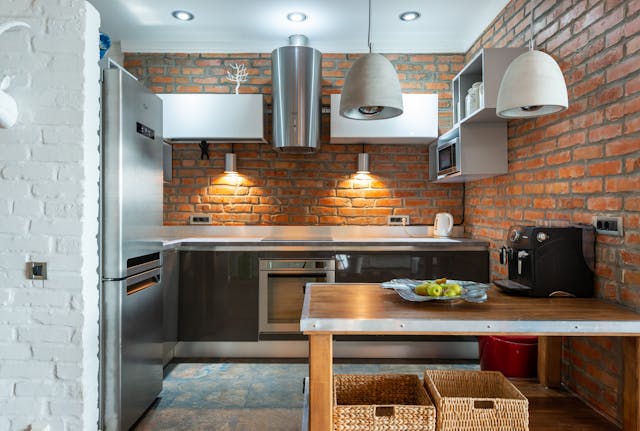
The kitchen is a space where activities such as cooking, washing, and sometimes even family gatherings take place. Therefore, lighting must be designed in a way that is both functional and aesthetically pleasing.
The Role of Lighting in Kitchen Interior Design
Proper lighting can make the space look more open, clean, and modern. In contrast, poor lighting can cause eye strain, reduce efficiency, and even make the kitchen appear smaller.
Types of Lighting in the Kitchen
General Lighting (Main Ceiling Lights)
This type of lighting is mainly used to illuminate the entire space, often achieved with ceiling fixtures or recessed lights.
Task Lighting
In areas of the kitchen where more work is done, such as above the sink, countertops, and stove, separate and stronger lights should be installed. Under-cabinet lights or linear LED strips are very common for this purpose.
Decorative Lighting
To create a luxurious and stylish look in the kitchen, decorative lights such as pendant lights above the island or modern chandeliers are used.
Ambient Lighting
A type of indirect hidden light that makes the kitchen space more pleasant and inviting.
Key Points in Kitchen Lighting During Renovation
1. Use of Natural Light
Maximizing natural light in kitchen renovation and design is very important. Installing larger windows or repositioning them can make a significant difference.
2. Light Color
Cool white light is suitable for efficiency, while warm yellow light creates a cozy atmosphere. Combining both can provide a good balance.
3. Controlling Light Intensity
Using a dimmer switch allows you to adjust the brightness based on your needs.
4. Harmony with the Overall Design
Lighting fixtures should match the kitchen’s interior design in terms of shape, color, and style for a more professional final look.
Smart Lighting in the Kitchen
With technological advances, smart lighting systems have become popular in kitchens. These systems allow you to control lighting via mobile phone, set timers, and even synchronize with music. In modern kitchen renovations, such features can create a unique experience.
Common Mistakes in Kitchen Lighting
-
Overusing harsh, direct lighting
-
Not separating task and general lighting
-
Designing without considering natural light sources
-
Using low-quality bulbs that cause excessive shadows
Conclusion
Lighting is one of the key elements in kitchen renovation and interior design. The right choice of light sources, placement, brightness, and color can greatly enhance both beauty and functionality. For the best results, combining design principles with modern technology and consulting professional designers is recommended.
FAQ
What is the best type of lighting for a kitchen?
A combination of general, task, and decorative lighting produces the best results.
Is yellow or white light better for the kitchen?
Both have their uses: white light enhances efficiency, while yellow light adds warmth. A mix of both is ideal.
How can kitchen lighting be improved?
Using under-cabinet lights, adjusting light angles, increasing natural light, and installing dimmers can optimize lighting.
What are the advantages of smart kitchen lighting?
It allows adjustment of brightness, color, scheduling, and even remote control.
How can natural light be used in the kitchen?
Installing larger windows, glass doors, and using light curtains maximize natural light.
Why is under-cabinet lighting important?
It makes working in the kitchen easier, more accurate, and safer.
Does kitchen lighting design require consultation?
Yes, consulting an interior designer helps prevent common lighting mistakes.


