
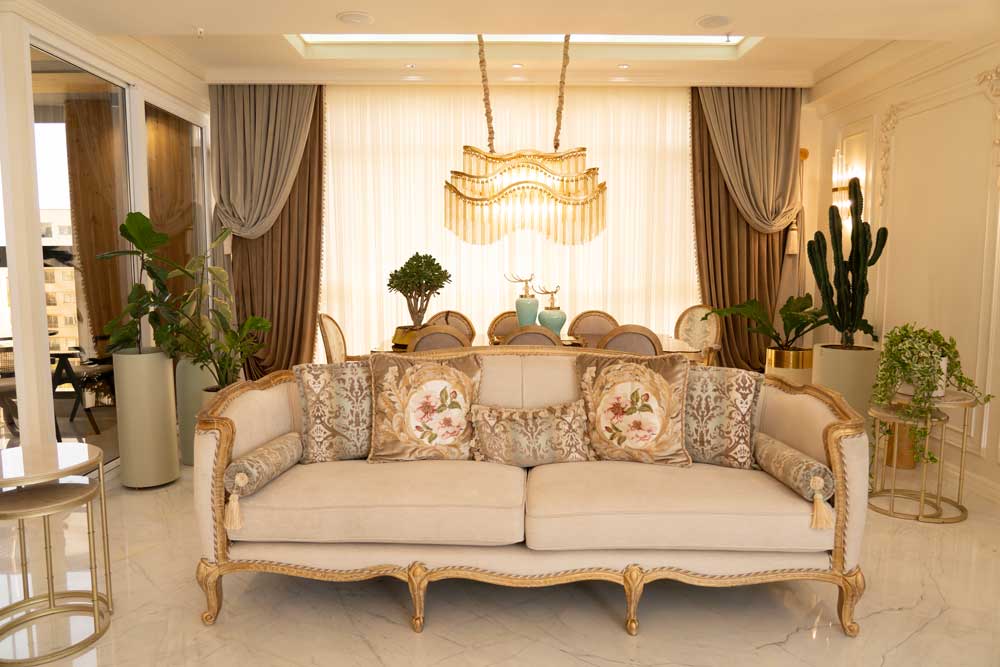
Light is one of the main elements in interior design, affecting not only the appearance of a space but also its mood and functionality. In the renovation and interior design of the living room, using smart lighting can provide residents with a luxurious, practical, and modern experience.
Why is smart lighting important in the living room?
In professional design, lighting is more than just a source of illumination. It can transform a neutral space into a warm, cozy, or even dramatic environment by creating contrast, highlighting decor details, or changing color and intensity. Smart lighting allows you to control these effects in a personalized way, with just a touch or a voice command.
Benefits of using smart lighting in the living room
- Remote control: With mobile apps or voice assistants like Google Assistant and Alexa, you can control the room’s lighting.
- Adjustable intensity and color: Depending on the activity (watching movies, reading, hosting guests, or relaxing), you can change the light’s color and brightness.
- Energy savings: Smart systems turn on and off automatically or switch to standby when no one is in the room.
- Enhanced aesthetics and flexibility: Hidden lights, halogens, track lights, or dimmers can add a professional and unique touch to the living room’s interior design.
Types of smart lighting suitable for the living room
- Ceiling hidden lights with digital control
One of the most popular choices in modern living rooms is hidden lighting within ceiling panels. These lights can change colors via remote or app and adapt to the mood of the space. - Wall lights with motion sensors
Installed in areas like entryways or pathways, these lights turn on automatically when movement is detected. - Smart dimmers
Dimmers allow you to adjust the brightness of each light as desired. In smart mode, these settings can be pre-programmed or activated by voice. - Wi-Fi-enabled table and floor lamps
For localized lighting near sofas or TV consoles, lamps with adjustable color and intensity can be controlled via Wi-Fi or Bluetooth.
Tips for implementing smart lighting in a living room renovation
- Plan from the start: If you are doing a full renovation, consider the wiring and installation of smart modules from the beginning.
- Consider natural light: The amount of daylight entering the room determines the placement and intensity of artificial lights.
- Use multiple light sources: Combining ceiling, wall, table, and floor lighting creates balanced illumination throughout the room.
- Include decorative lighting: Hidden lighting behind shelves, paintings, or even in the floor can add a unique visual effect.
FAQ
- Can smart lighting be installed in older homes?
Yes, many smart lighting systems don’t require major changes and can be implemented by simply replacing bulbs or switches. - Is voice control practical?
Yes, by connecting the lighting system to voice assistants like Alexa or Google, you can turn lights on/off or adjust them with voice commands. - How much does it cost?
Costs depend on the brand and system size, but generally, 5–10 million Toman can set up a smart lighting system for a living room. - Do these systems consume more electricity?
No, most systems save electricity due to precise control. - Are smart lights only suitable for modern styles?
No, they can also be used in classic designs, but the type of lights should match the style. - Do I need a professional electrician for installation?
For systems requiring wiring, yes. However, some smart bulbs or switches are easy to install by yourself. - Which smart lighting brands are best?
Brands like Philips Hue, Xiaomi Yeelight, and TP-Link are popular and available in Iran. - Are colored lights suitable for the living room?
Yes, when adjusted to taste and needs—for example, warm lights for the evening and cooler colors for parties. - Are these systems secure?
Security is maintained if you use reputable brands and strong passwords. - How can lighting be coordinated with other design elements?
By choosing the right light color and adjusting its intensity according to wall, floor, and furniture colors, ideal visual harmony can be achieved.


